
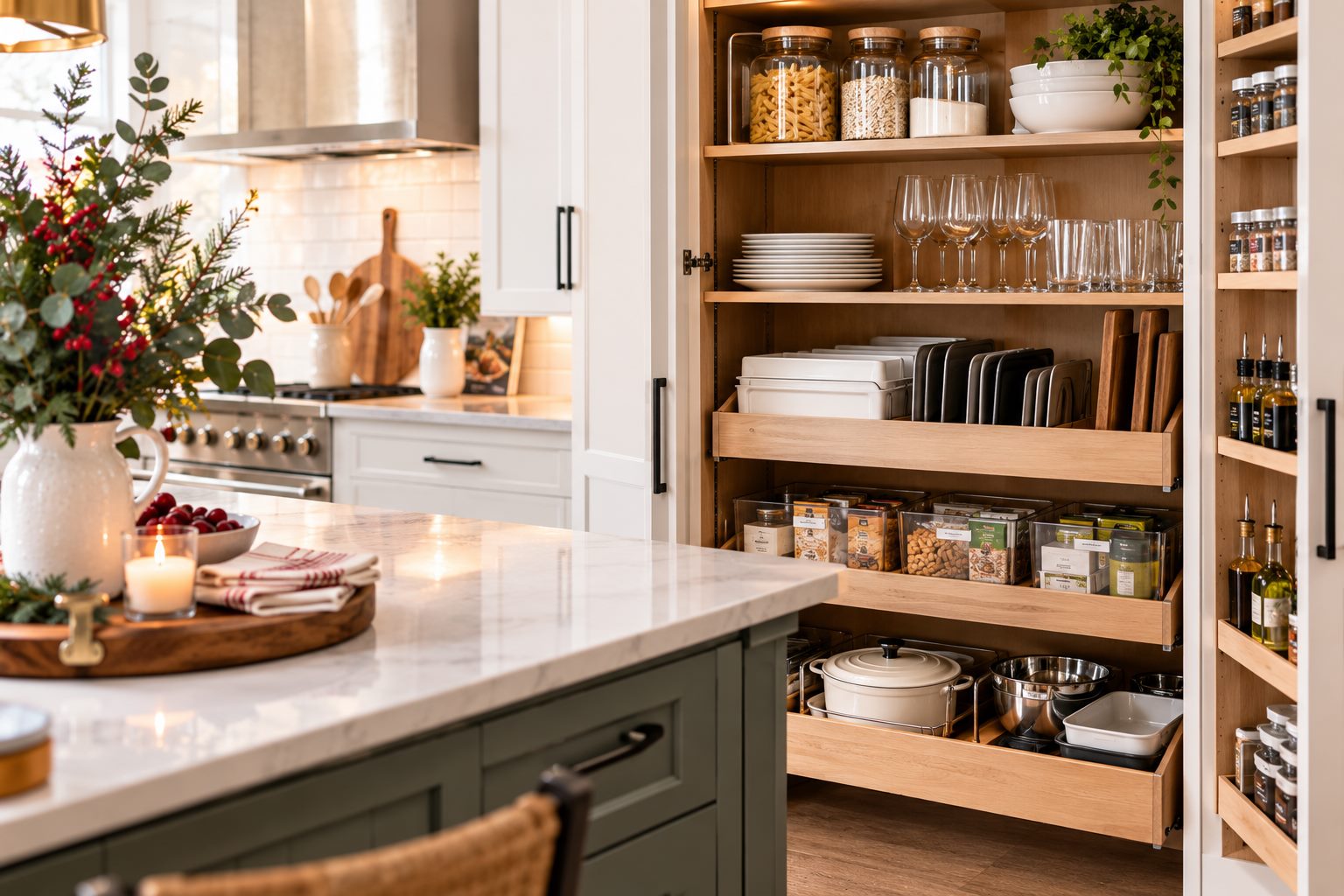
Holiday meals often reveal kitchen problems that ordinary weekday cooking hides. The serving platters are difficult to reach, the mixing bowls compete with pans, and guests gather in the same space you need for food preparation.
October is a useful time to explore kitchen cabinet storage ideas while there is still room to observe the problem and plan carefully. You do not need to rush into a renovation to learn something valuable about your kitchen.
For Lexington and Central Kentucky homeowners considering cabinetry, hosting provides a practical design test. Here is how to turn crowded shelves and awkward routines into a useful brief for a cabinet consultation.
Inventory the Items That Need a Better Home
Start by grouping what you own. Separate everyday dishes, cookware, food storage, serving pieces, small appliances, and pantry items.
Then identify what is difficult to retrieve or put away. A cabinet can hold plenty of items while still functioning poorly if the things you use most are behind everything else.
Measure unusually large objects, such as roasting pans, mixers, trays, and platters. Bring those dimensions to a design conversation instead of assuming a standard shelf will accommodate them.
Also note what you rarely use. A seldom-needed item may deserve less prominent space than everyday essentials. The purpose is not to discard everything; it is to assign storage according to actual use.
Map Storage Around Tasks
A useful kitchen plan connects items to the activity they support. Food preparation, cooking, serving, and cleanup do not all happen in the same place.
Mark where you normally chop ingredients, handle hot cookware, assemble plates, and unload dishes. Then look at how far you travel to retrieve the items required for each task.
This review may reveal a layout issue rather than a simple shortage of cabinets. Adding storage in the wrong place can leave the routine just as inconvenient.
Describe these movements to the designer. “I cross the kitchen for mixing bowls every time I bake” gives more useful direction than “I need more storage.”
Separate the hosting route from the cooking route
If guests collect drinks beside your main preparation area, consider whether another location could serve that function.
A separate serving zone may reduce overlapping activity. Whether it fits depends on the space, clearances, appliances, and broader design, so discuss it as a goal rather than a predetermined cabinet addition.
Compare Drawers and Shelves by What They Hold
Deep drawers can make some cookware easier to see and access. Shelves may suit other items or specific cabinet arrangements. The right choice depends on dimensions, weight, reach, and the hardware involved.
Do not choose an interior feature solely because it looks organized in a photograph. Ask what it will hold and whether your own items fit.
Discuss drawer load limits, usable interior dimensions, and how dividers or inserts affect capacity. A wide drawer front does not mean every inch behind it is available for storage.
For shelves, consider adjustment options and the accessibility of items at the back. Explain any reach or mobility concerns before the layout is finalized.
Give Serving Pieces a Deliberate Place
Holiday trays and platters are often stored wherever they fit, which may mean balancing a stack high above the workspace.
Consider whether vertical organization, adjusted shelves, or another arrangement would make sense for the pieces you own. Measure them before choosing an accessory.
Keep frequency of use in mind. A platter brought out twice a year may not need prime space, but it should still be possible to retrieve without an improvised balancing act.
If your dining area has nearby cabinetry, discuss whether some serving storage belongs there. The best location may depend on how you set the table and clean up afterward.
Use Pantry Planning to Reduce Cabinet Overlap
Pantry storage can free kitchen cabinets from holding unrelated groceries, serving dishes, and appliances together. But a pantry needs planning of its own.
List the foods and containers your household regularly buys. Note package sizes, bulk purchases, and items used by children or other household members.
Ask about shelf depth and visibility. Very deep storage can make it easy to lose track of smaller items behind larger ones.
If you want to store an appliance in a pantry, distinguish between storing it unplugged and operating it there. Operating arrangements require professional consideration of power, clearances, ventilation, and the product’s instructions.
Plan Cleanup Storage Alongside Cooking Storage
Cleanup can create a bottleneck during hosting. Consider where dishes are placed, where clean items are stored, and where waste and recycling are handled.
A practical cabinet layout should reflect the path between these activities. Explain what currently causes crowding or repeated trips.
Keep cleaning products stored appropriately and separately from food according to the products’ instructions and household needs. Child safety should be part of the discussion where relevant.
If the project involves moving plumbing or changing appliances, coordinate those decisions with the broader renovation team. Cabinet design cannot be finalized in isolation from the systems it needs to fit around.
Do Not Choose Cabinet Accessories Before the Layout
Pull-outs, organizers, dividers, and specialized fittings can be useful, but they work within a larger design. An accessory cannot always fix a poorly placed cabinet.
Start with the storage problem and ask the designer to compare options. A simple arrangement may serve you better than a complex mechanism with limited usable space.
Discuss maintenance and replacement as well as convenience. Understand how moving parts operate and what support is available if adjustments are needed.
Cabinets on Main offers cabinetry and design services for kitchens, pantries, and other areas. A consultation can connect your storage priorities with cabinet selection and the rest of the room.
Balance Everyday Life With Occasional Entertaining
A kitchen should not become inconvenient for the rest of the year simply to accommodate one large meal.
Give everyday items the easiest locations, then plan flexible space for hosting supplies. Explain how many people normally use the kitchen and what changes during gatherings.
For example, a household that bakes weekly may need a different arrangement from one that cooks mostly quick dinners and occasionally hosts a buffet.
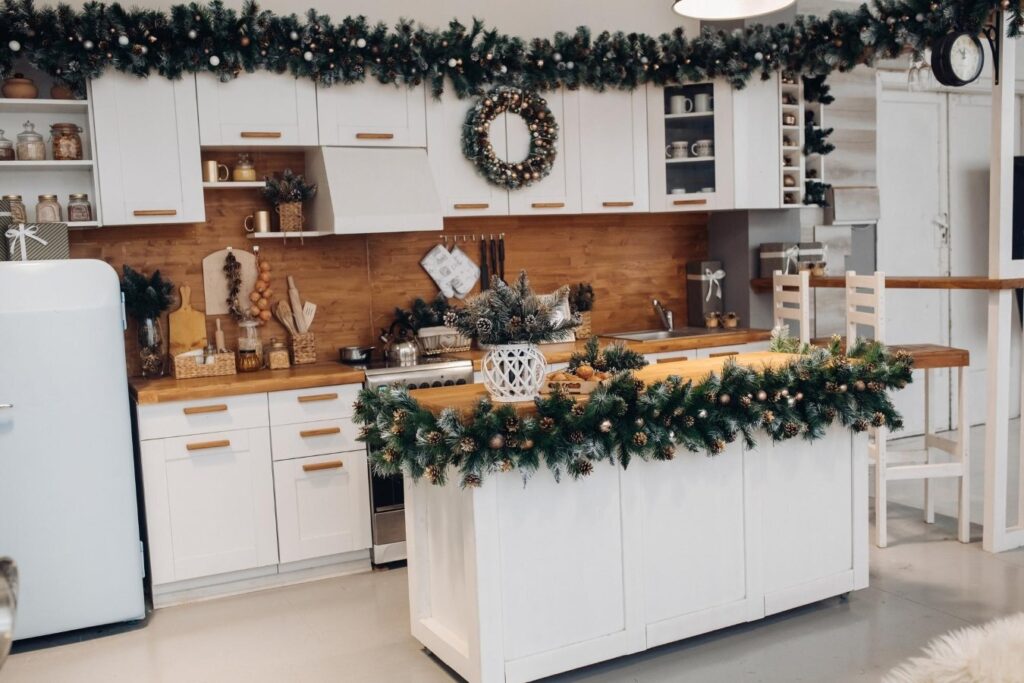
Avoid copying a display kitchen without considering those differences. Your routines should guide the storage plan, even when the visual inspiration comes from another home.
Prepare a Cabinet Consultation Brief in October
Bring a room sketch, photographs, and a short inventory of difficult-to-store items. Label approximate measurements as preliminary; final dimensions should be verified through the project process.
Write down three storage priorities. You might want accessible cookware, better pantry visibility, and a place for oversized serving pieces.
Include the finishes you like, your broader renovation plans, and any appliances that will remain. Note whether a designer or builder is already involved.
Cabinets on Main works with homeowners, builders, and designers. Sharing the project team early helps establish who is responsible for measurements, selections, coordination, and installation decisions.
Ask Questions About Scope and Timing
Clarify whether the proposal covers design, cabinetry, hardware, installation, and related work. Understand which elements are provided by other trades.
Ask when selections need to be finalized and what may affect lead times. If holiday hosting is your reason for starting, state the date but do not assume new cabinets can be completed before it.
You can still use October productively if construction happens later. Observe the current kitchen during hosting and add real examples to the design brief.
A well-defined project is more valuable than rushing a permanent layout to meet a temporary deadline.
Test Your Storage Brief During an Ordinary Meal
Before the design appointment, prepare a familiar meal and note the items you retrieve repeatedly. Then imagine where those items would live in the proposed zones.
This test may reveal that your main need is convenient everyday storage rather than more room for holiday pieces. It can also show whether a proposed serving area overlaps with the place you use to unload dishes.
Share these observations with the designer. A brief based on both ordinary cooking and occasional hosting offers a more balanced picture than either situation alone.
Keep a short note of the three movements you most want to simplify. Those examples can make an abstract layout discussion much more concrete.
Frequently Asked Questions
What are the most useful kitchen cabinet storage ideas for hosting?
Start with serving pieces, cookware, pantry visibility, and cleanup storage. Place items near the tasks they support and measure anything unusually large. The most useful idea is the one that solves a specific problem in your kitchen, rather than an accessory chosen only because it looks organized online.
Are drawers better than shelves for pots and pans?
Drawers can make some cookware easier to access, but suitability depends on item dimensions, weight, cabinet size, and hardware. Shelves may work well in other arrangements. Compare usable interior space and operation with a designer so the choice reflects your own cookware and reach needs.
How should I store large serving platters?
Measure the pieces and note how often you use them. Discuss vertical organization, shelf adjustments, or nearby dining storage where appropriate. Avoid assuming that a narrow-looking organizer fits every platter. The arrangement should allow safe retrieval and leave convenient space for the items you use every day.
Can better cabinet storage reduce kitchen crowding?
It may help when items are placed closer to the tasks they support, but crowding can also involve the overall layout and guest movement. Review cooking, serving, and cleanup routes together. A storage accessory alone may not resolve a circulation problem that requires broader design consideration.
Can I plan new cabinets now without remodeling before the holidays?
Yes. October can be used for inventory, photographs, consultations, and selection planning. Hosting in the current kitchen may reveal additional needs for the later design. Ask about the actual project schedule rather than assuming a consultation guarantees installation before a specific gathering.
Design Storage Around the Way You Use Your Kitchen
Bring your kitchen cabinet storage ideas to Cabinets on Main or call 859-535-8663. Discuss your Lexington or Central Kentucky project, serving needs, and everyday routines to begin a more useful cabinetry plan.
