
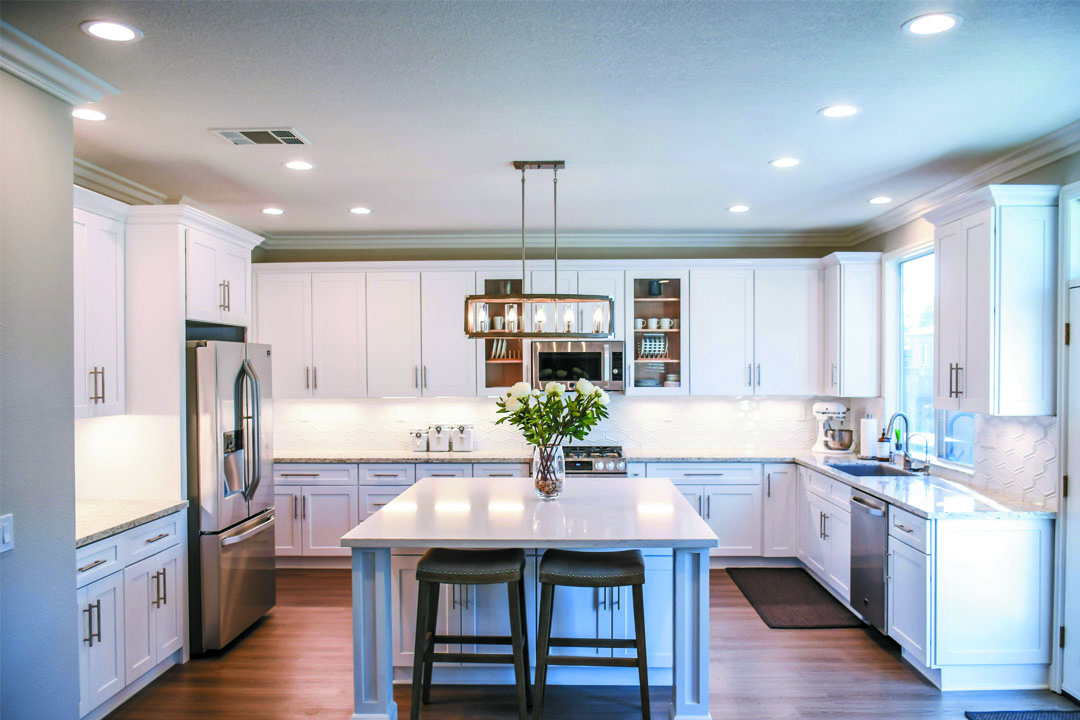
The right cabinets do more than store things—they organize your day, define your style, and add lasting value. If you’re researching cabinet design and installation, this guide walks you through each step: planning, materials, finishes, layout choices, timelines, and how to avoid common pitfalls so your kitchen, bath, or built-ins turn out beautifully.
Start With Function, Then Shape the Style
Map Real-Life Zones
Before mood boards, list what you actually store and how you use the room.
- Kitchen: Prep (cutting, mixing), cook (range/oven), clean (sink/dish), small-appliance garage, bulk storage, trash/recycling.
- Bath: Daily-use drawer stacks, tall linen storage, electrical outlets in drawers for hair tools.
- Living/Office: Media components, closed storage for clutter, open shelves for display.
Design zones first—then pick door styles, colors, and hardware that fit.
Traffic & Clearances
Plan for 42–48 in. between island and perimeter, 24 in. landing zones near major appliances, and full door/drawer swing without collisions. Proper clearances are the difference between “pretty” and “works every day.”
Cabinet Construction 101 (Why It Matters)
Box & Joinery
- Plywood boxes resist sag and moisture better than particle board in high-use areas.
- Dovetail drawers and full-extension, soft-close slides extend life and usability.
Door Styles
- Shaker: clean, transitional; hides fingerprints better than flat slab.
- Slab/Flat: modern, minimal; pair with integrated pulls for seamless lines.
- Inset vs. Overlay: Inset is furniture-like and precise; full overlay maximizes opening size and is budget-friendlier.
Finish Choices
- Painted (conversion varnish): crisp color, repairable; choose durable topcoats.
- Stained wood (white oak, walnut, maple): warmth and grain; great for mixed-material kitchens.
- Thermofoil/Laminate: modern look, wipeable surfaces; good for laundry/mudroom.
Smart Storage That Actually Gets Used
Kitchen Upgrades
- Deep drawers for pots and pans beat dark base cabinets.
- Tray dividers & spice pullouts keep small items visible.
- Trash/recycling pullouts near prep and sink zones.
- Corner solutions (LeMans, blind-corner pullouts) avoid dead space.
- Appliance garage with outlets to hide daily drivers.
Pantry & Mudroom
- Adjustable roll-outs for bulk goods.
- Mudroom lockers with bench, hooks, and charging drawers.
Bath Details
- U-shaped sink drawers reclaim space around plumbing.
- Tall towers for towels; tilt-out hampers for laundry.
The Design Process—From Idea to Order
Step 1 — Discovery & Measurements
Share inspiration, inventory your items, and measure walls, windows, and utilities. Pro tip: photograph every wall, outlet, and vent.
Step 2 — Schematic Layout
Your designer drafts floor plan and elevations: appliance placement, cabinet runs, island size, and working clearances. Expect iterative tweaks until movement through the space feels natural.
Step 3 — Selections & Spec
Choose door style, wood/paint, interior accessories, and hardware. Confirm hinge/slide specs (soft-close, full extension). Approve final drawings.
Step 4 — Site Readiness
Coordinate electrical, plumbing, HVAC, flooring, and drywall. Walls must be plumb, floors level, and rough-ins exactly where drawings show.
Installation—What “Good” Looks Like
Pre-Install Checklist
- Level check across the room (laser).
- Locate studs and mark utilities.
- Stage boxes by run; inspect for shipping issues.
Set in the Right Order
- Start with uppers or the highest run to avoid reaching over bases.
- Shim and laser-level bases to a continuous plane for perfect counters.
- Fasten into studs; adjust doors/drawers for consistent reveals.
- Scribe fillers and toe kicks for a built-in look.
Countertops & Templating
Once bases are locked, countertop fabricator templates. Keep sink/faucet/appliance specs on site for cutouts and overhang details.
Final Fit & Punch
Align hardware, adjust soft-close tension, add touch-up paint or color-matched wax sticks, and review a punch list with your installer.
Timeline & What Affects It
- Design & approvals: 1–3 weeks depending on revisions.
- Fabrication/ordering: 3–10+ weeks (custom vs. semi-custom).
- Demo & prep: 1–3 days (longer for major remodels).
- Install: 2–5 days for typical kitchens (more with full-height panels and built-ins).
- Counters (templating → install): ~1–2 weeks after cabinets are set.
- Final touch-ups & backsplash: 1–3 days.
Variables: custom finishes, appliance lead times, flooring changes, and jobsite readiness. A good team sets expectations with dates and milestones.
Budget Drivers (Without Posting Numbers)
- Door style & finish: inset and specialty finishes increase precision time.
- Interior accessories: roll-outs, organizers, and lighting add cost but pay daily dividends.
- Tall panels & appliance fronts: panel-ready dishwashers/fridges elevate the look.
- Custom sizes & arches: more shop time for unique geometries.
- Install complexity: out-of-plumb walls, soffits, and site changes require extra carpentry.
Ask your provider for Good / Better / Best specs so you can invest where it matters (drawers, hinges, daily-touch areas) and economize elsewhere.
Style Playbook—Timeless, Not Trend-Tired
Modern Warm
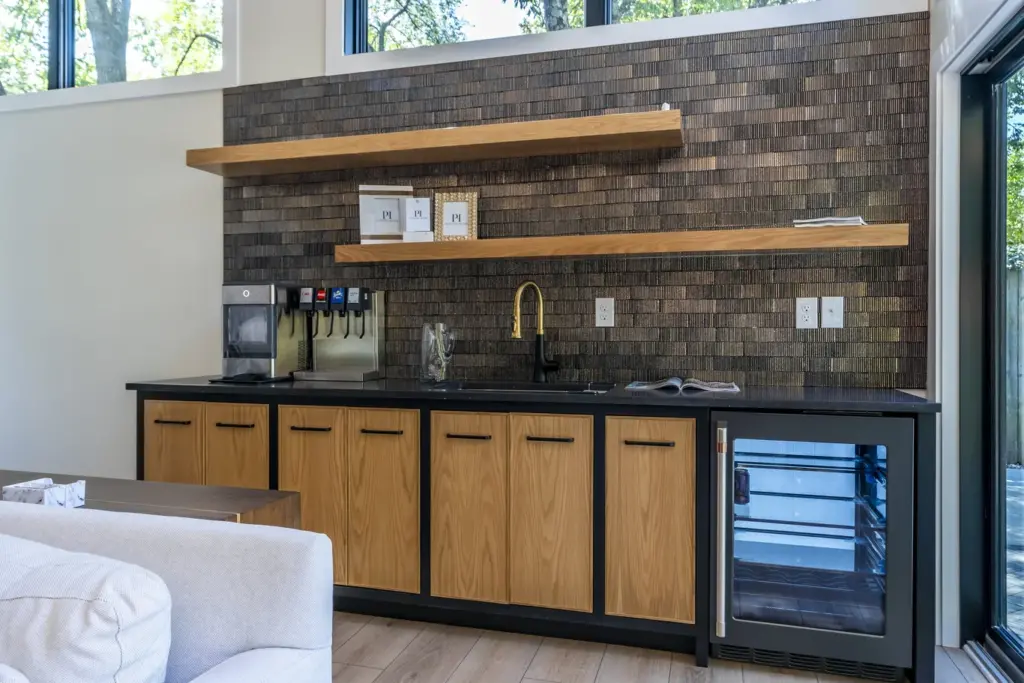
Flat-slab oak + matte black hardware + quartz with subtle movement. Keep uppers minimal; add a large island with waterfall ends.
Classic Transitional
Shaker doors, soft white perimeter, quarter-sawn white oak island, warm brass pulls, and a simple stacked tile—fresh now and 10 years from now.
Moody & Textural
Charcoal lowers, natural wood uppers, mixed-metal hardware, and ribbed glass on a few doors for soft display.
Lighting & Electrical You’ll Thank Yourself For
- Under-cabinet LEDs (hardwired, 2700–3000K) for shadow-free prep.
- In-drawer outlets for hair tools or device charging.
- Toe-kick lights as night guides in kitchens/baths.
- Switching by zone so task, ambient, and accent light work independently.
Plan wiring during design—retrofitting later is costly.
Maintenance & Longevity Tips
- Wipe spills quickly; avoid abrasive pads on finishes.
- Adjust hinges annually to keep reveals even as homes shift.
- Use felt pads under frequently handled décor.
- Register warranties and keep touch-up kits labeled by color/finish.
Common Mistakes (and Easy Fixes)
- Overstuffed layouts: Leave breathing room; negative space makes kitchens feel bigger.
- No landing zones: Always flank wall ovens, ranges, and fridges with set-down space.
- One giant trash can: Use a dual-bin pullout near prep and a small bin at cleanup.
- Skipping drawer stacks: Base drawers increase access and visibility—use more of them.
- Guessing appliance sizes: Lock specs before final drawings to avoid field cuts.
FAQs About Cabinet Design and Installation
Q: Semi-custom or full custom?
A: Semi-custom covers most homes efficiently; go full custom for tricky spaces, exacting inset reveals, or unique finishes.
Q: Paint or stain for durability?
A: Both last with quality topcoats; painted shows nicks sooner but is easier to touch up. Stained hides wear and adds warmth.
Q: Can I live through a kitchen install?
A: Yes, with a temporary kitchenette (micro, hot plate, small sink) and clear containment to control dust.
Call to Action:
Ready to map your space with a designer, compare finishes, and see clever storage in person? Book a design consultation today—we’ll translate your wish list into cabinets that fit your life and your home.
